
Two-Sim Allegations Cloud Political Ambitions: Are Sengeh And Fatima Bio Eligible For The Presidency?

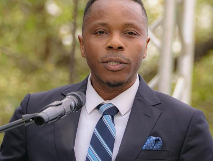
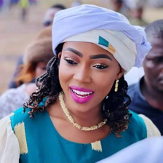
As political succession battles intensify within the ruling Sierra Leone People’s Party (SLPP), growing questions are emerging over the citizenship status and constitutional eligibility of two prominent figures reportedly positioning themselves within the party’s 2028 succession conversation: First Lady Fatima Bio and Chief Minister Dr David Moinina Sengeh.
The political atmosphere within the SLPP appears increasingly charged, with Fatima Bio and Chief Minister David Moinina Sengeh attracting considerable attention in discussions about who could succeed President Julius Maada Bio when his second term ends in 2028.
While some political observers believe that if the President’s preferred successor is not his political blue-eyed boy, David Sengeh, it could be the First Lady herself, Fatima Bio, others argue that the emerging succession contest is far from settled.
Fatima Bio, who heads Ebema Gbi, and Sengeh, associated with the Radical Inclusion Movement, have increasingly become subjects of political discussions, speculation and public debate over the future leadership of the ruling party.
Although other potential contenders, including Vice President Dr Mohamed Juldeh Jalloh and Dr Kandeh Kolleh Yumkella, are also being mentioned in conversations about the post-Bio era, attention appears to be increasingly focused on Fatima and Sengeh.
But beyond their political ambitions, an important constitutional question is beginning to attract public attention: Are Fatima Bio and David Sengeh dual citizens, commonly referred to in Sierra Leone’s political vocabulary as ‘Two-SIM’ holders, and would either of them satisfy the constitutional requirements to contest for the presidency in 2028?
Fatima Bio: Questions over British Citizenship
Questions surrounding First Lady Fatima Bio’s citizenship status have become a subject of public and political discussion, particularly because of her long-standing connection with the United Kingdom.
Fatima reportedly moved to Britain in 1996 at the age of 16 as an asylum seeker, following circumstances surrounding an alleged arranged marriage. She subsequently lived and worked in London, pursuing careers in acting and modelling before becoming Sierra Leone’s First Lady.
There have been persistent claims in Sierra Leone’s public discourse that she acquired British citizenship during her years in the United Kingdom.
The issue attracted renewed attention following public discussions in 2026 concerning a Southwark Council housing property in London reportedly associated with her. Questions about her children’s British citizenship have also featured in the public debate.
However, the citizenship status of her children does not, in itself, establish that Fatima Bio holds British citizenship.
The critical question remains whether she currently possesses British citizenship alongside her Sierra Leonean citizenship.
Has Fatima Bio ever formally confirmed or denied holding a British passport? Does she possess another nationality, and if so, has she taken any formal steps to renounce it?
Given the constitutional implications of dual citizenship for presidential eligibility, these are questions that deserve clear answers, supported by verifiable documentation.
David Sengeh: The American Citizenship Question
Unlike the questions surrounding Fatima Bio, David Moinina Sengeh has previously spoken about his years of academic and professional experience in the United States, reportedly maintaining that he did not acquire American citizenship despite spending considerable time there.
Sengeh studied and worked in the United States, building an academic and professional career before returning to Sierra Leone and eventually becoming Chief Minister.
Nevertheless, questions continue to circulate about his immigration status during his years in America.
Did he ever obtain permanent residency, commonly known as a Green Card? If so, when was it issued, how long did he maintain that status, and is it still valid?
There are also questions about whether he ever applied for American citizenship or formally declined the opportunity to naturalise.
His marriage to Kate Krontiris, who has been described in public discussions as an American citizen, has also generated speculation about his possible immigration status.
Under American immigration law, marriage to a United States citizen does not automatically confer American citizenship. It can, however, provide a pathway to permanent residency and, subject to meeting the relevant legal requirements, eventual naturalisation.
Consequently, questions have emerged about whether Sengeh obtained permanent residency through marriage or another immigration route, whether he subsequently applied for naturalisation, and whether he continues to hold any foreign immigration status.
It is important to distinguish between permanent residency and citizenship: holding a US Green Card does not, by itself, make someone a dual citizen.
There is, however, a legitimate public-interest question about whether any foreign citizenship acquired by a potential presidential aspirant could affect their constitutional eligibility.
What Does the 1991 Constitution say?
The constitutional debate surrounding dual citizenship and presidential eligibility centres on the provisions governing qualification for election to Parliament and the presidency.
Section 41 of the 1991 Constitution establishes the qualifications for election as President, including the requirement that a presidential candidate must satisfy the relevant constitutional conditions for parliamentary eligibility.
Section 76 also contains provisions governing eligibility for election to Parliament, including restrictions relating to citizenship of another country.
The interpretation and application of these provisions are therefore central to determining whether a Sierra Leonean who also holds foreign citizenship can qualify to contest the presidency.
However, the precise constitutional position, including the effect of any subsequent amendments and relevant judicial interpretations, must be established before declaring any individual disqualified.
The debate is particularly significant as Sierra Leone approaches the 2028 general elections, when questions of constitutional eligibility could become a major issue in the political succession contest.
The questions that demand answers
For Fatima Bio:
* Does she currently hold British citizenship alongside her Sierra Leonean citizenship?
* Has she ever held or travelled on a British passport?
* If she acquired British citizenship, has she formally renounced it?
* Does she consider herself constitutionally eligible to contest the presidency in 2028?
For David Moinina Sengeh:
* Did he ever obtain a United States Green Card or another form of permanent residency?
* If so, when was it issued, and does he currently maintain that status?
* Has he ever submitted an application for American citizenship?
* Has he ever been granted citizenship by another country?
* Does he consider himself constitutionally eligible to contest the presidency in 2028?
These questions are not merely about the personal lives of two influential political figures. They touch on constitutional accountability, transparency and the standards expected of individuals who may seek the highest office in the land.
As political conversations about President Bio’s successor gather momentum, the public deserves clarity rather than speculation.
Ultimately, the question is not simply who President Bio would prefer to succeed him, but who among the potential contenders can satisfy every constitutional requirement to become Sierra Leone’s next President.
The citizenship question surrounding Fatima Bio and David Sengeh is one that neither political influence nor public speculation can settle. Only credible documentation, clear explanations and, where necessary, authoritative constitutional interpretation can provide the answers.
The 2028 succession debate may be about political power, but constitutional eligibility must come first.