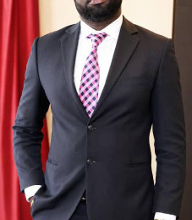


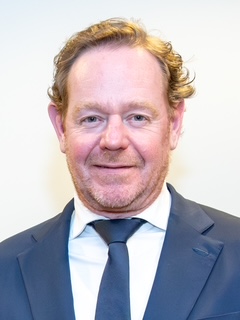
The Dutch Government is now reportedly pushing for the European Union to cut development aid to Sierra Leone over the country’s alleged failure to arrest and extradite convicted Dutch drug trafficker Jos Leijdekkers, popularly known as “Bolle Jos.”
According to reports, the Dutch government is seeking support from other European countries to increase pressure on Sierra Leone. Dutch Minister of Justice and Security, David van Weel, made the remarks during an appearance on the television programme Binnenhof, according to NOS.
The European Union has allocated €325 million in development assistance to Sierra Leone for the period 2021–2027. The country also benefits from several regional and international EU-funded programmes.
“It is, of course, bizarre that we facilitate or support a country that simultaneously offers a safe haven to one of the biggest drug criminals known worldwide,” Van Weel said. Leijdekkers is reportedly facing a combined prison sentence of approximately 80 years in the Netherlands and Belgium for drug trafficking-related offences.
In early May, Van Weel said he attempted to advance the extradition process through diplomatic channels by speaking with his counterpart in Sierra Leone. However, he said he received the same response that Dutch authorities have reportedly been hearing for the past six months—that Sierra Leone is working on the matter and that legal procedures are underway.
The minister indicated that he has little confidence that political engagement alone will resolve the issue. “So we are looking more broadly,” he stated.
According to Van Weel, apprehending Bolle Jos remains one of his top priorities and is also in Sierra Leone’s national interest.
“In our estimation, this man has an income of hundreds of millions of euros per month in a country whose gross national product is lower than his income. That level of wealth has the potential to seriously undermine institutions through corruption,” he said.
Van Weel also referenced the record drug seizure near the Canary Islands in early May, when Spanish authorities intercepted a vessel carrying between 30,000 and 45,000 kilograms of cocaine. Several Dutch nationals were arrested in connection with the operation.
Describing it as an unprecedented drug shipment, the minister alleged that the vessel was loaded in Freetown, Sierra Leone’s capital. He further suggested that such an operation could not have been carried out without assistance at multiple levels, though no evidence was publicly presented during the interview.
Reports have also linked Bolle Jos to members of Sierra Leone’s political elite, with some media outlets alleging a romantic relationship between the fugitive and a daughter of President Julius Maada Bio. These claims have attracted significant public attention, although they remain politically sensitive.
Last month, Dutch newspaper De Telegraaf reported that the Netherlands had prepared a special operation involving police and naval forces to arrest Leijdekkers at sea off the West African coast. The operation was reportedly called off at the last minute. Van Weel declined to comment on the report during his appearance on Buitenhof.
The developments underscore growing international pressure on Sierra Leone as authorities in the Netherlands continue efforts to secure the arrest and extradition of one of Europe’s most wanted drug traffickers.