
EU & SIERRA LEONE RELATIONSHIP: FROM SOLID FOUNDATION TO SINKING SAND?

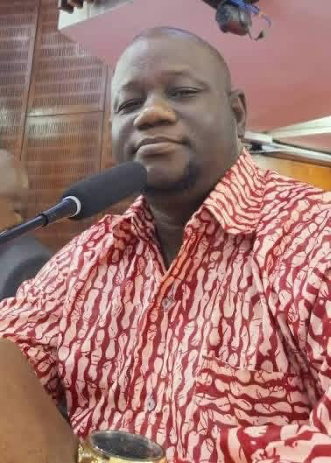
By Hon. Alpha Ben Mansaray, MP, Moyamba District
For nearly five decades, the relationship between Sierra Leone and the European Union (EU) has stood as one of our nation’s most enduring development partnerships. From the dark days of the civil war to post-war reconstruction, democratic consolidation, institutional reform, road infrastructure, healthcare, education, and agriculture, the EU has remained a steadfast partner in Sierra Leone’s development journey.
The EU played a critical role in helping to resettle war victims, rehabilitate ex-combatants, and restore governance institutions following the conflict. Today, many major roads, public institutions, and social development programmes continue to benefit from EU support. Only recently, Sierra Leone and the European Union celebrated 50 years of partnership. EU Ambassador Jacek Jankowski described the relationship as one founded on “mutual respect, cooperation, and solidarity.”
THE UNCOMFORTABLE TRUTH
Yet beneath the celebrations lies a growing concern.
International allegations and concerns surrounding drug trafficking linked to Sierra Leone are increasingly casting a shadow over decades of goodwill and cooperation. Ambassador Jankowski recently expressed serious concern about Sierra Leone’s drug-related challenges. He pointed to allegations that the country is being used as a transshipment hub and warned of the potential damage such perceptions can inflict on Sierra Leone’s international reputation.
He further stressed that Sierra Leone faces significant challenges in monitoring its borders and emphasized the need for stronger national and international cooperation to combat trafficking and other forms of transnational crime.
This is not merely a political challenge for the current administration. The implications extend far beyond any one government or political party.
WHEN A NATION’S REPUTATION SUFFERS
Nations spend decades building trust and credibility, yet reputations can be damaged in a matter of months.
When a country becomes associated with international drug trafficking, the consequences can be far-reaching:
1. Investors become more cautious.
2. Development partners may reconsider their engagement.
3. Financial institutions increase scrutiny of transactions.
4. Travel advisories may become stricter.
5. Trade and investment opportunities become more difficult to secure.
Most painful of all, ordinary citizens often bear the heaviest burden of a damaged national image.
Recent reports linking Sierra Leone to major cocaine trafficking investigations have attracted unwanted international attention. Security agencies are reportedly investigating vessels alleged to have departed from Freetown before being intercepted abroad with significant cocaine consignments.
Even more concerning are reports suggesting that some European policymakers are discussing whether aspects of EU development assistance should be reviewed in light of trafficking concerns. Reports further indicate that Dutch officials have advocated for increased EU pressure on Sierra Leone to address allegations of trafficking and alleged links to internationally wanted criminal figures.
NATIONAL INTEREST ABOVE PARTISAN POLITICS
Those involved in illicit activities may believe that money, influence, or political connections can shield them from consequences. History teaches otherwise.
Organized crime rarely harms only the individuals directly involved. Entire nations can suffer through reduced foreign investment, weakened diplomatic relationships, lost economic opportunities, and declining international confidence.
This issue must rise above the politics of the SLPP, APC, or any other political affiliation. It is fundamentally a national issue.
When Sierra Leone’s reputation suffers, every Sierra Leonean suffers. The international community does not distinguish between governments and citizens when judging the standing of a nation.
PROTECTING THE FOUNDATION
The Sierra Leone–European Union partnership was built on trust, sacrifice, cooperation, and shared aspirations for development. It is a relationship too valuable to place at risk.
Trust, once damaged, is never easily restored.
The warning signs are becoming increasingly difficult to ignore. Ambassador Jankowski has raised concerns. International media outlets have highlighted the issue. Security agencies and international partners continue to monitor developments closely.
The question before us is simple:
Will we act decisively to protect our nation’s reputation before a solid foundation gradually gives way to sinking sand?
Fixing Sierra Leone requires more than speeches and political rhetoric. It demands collective action, stronger border security, effective law enforcement, accountability, and a united national commitment to combating transnational crime.