
Freetown on the Brink: Earthquake Tremors Expose a City at Risk

By Mohamed Ismail Kamara
Executive Director, Stichting EcoProbe Africa, Netherlands
ecoprobeafrica@gmail.com

The tremors that shook parts of Freetown on Tuesday, October 13, 2026, have reignited concerns about the safety of the capital’s buildings and the growing environmental threats facing the city. While authorities have urged the public to remain calm, environmental campaigner Mohamed Ismail Kamara warns that the incident should serve as a wake-up call for a city increasingly exposed to flooding, landslides, deforestation and poorly managed urban development.
For years, I have written about the environmental dangers confronting Freetown. I have warned about the destruction of our forests, the unchecked expansion of settlements onto vulnerable hillsides, and the growing risks posed by climate change and poor urban planning. At times, I have wondered whether anyone was listening.
Then the ground trembled.
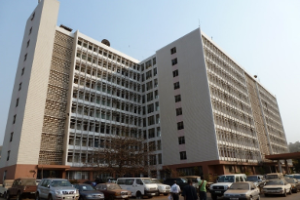
At approximately 12:23 p.m. on Tuesday, October 13, reports of shaking emerged from parts of Freetown. Offices at Youyi Building reportedly swayed, workers in other locations felt the tremors, and people rushed outdoors in fear.
For a moment, the city was reminded of its vulnerability.
According to preliminary information from the Sierra Leone Meteorological Agency (SLMet), the tremors may have been associated with a reported magnitude 6.9 earthquake in the Atlantic Ocean, approximately 1,195 kilometres from Freetown. Authorities have been investigating the incident, and its precise implications for buildings in the capital require careful scientific assessment.
But the question that should concern us goes beyond what happened on Tuesday. What if a similar earthquake occurred much closer to Sierra Leone’s coastline? Would our buildings, roads and other critical infrastructure withstand the shaking? Are we adequately prepared for a major disaster?
These are questions we can no longer afford to ignore.
Youyi Building and the Question of Structural Safety
Following reports of the tremors, the National Disaster Management Agency (NDMA) mobilised teams to assess Youyi Building and other locations where the shaking was reportedly felt. Preliminary reports indicated no major damage, and the public was urged to remain calm.
Such reassurance is important. However, it should not replace a comprehensive assessment of the structural safety of buildings exposed to unusual shaking.
Youyi Building accommodates government offices and hundreds of workers and visitors. Reports that the building swayed during the tremors have raised questions about its structural integrity, the ground on which it stands, and whether it requires further engineering examination.
Did the movement reflect the characteristics of the earthquake, the building’s design, the underlying soil conditions, or a combination of factors?
These questions cannot be answered through speculation. They require qualified structural engineers, geotechnical experts and independent investigators.
The government should therefore commission a thorough structural assessment of Youyi Building, including a review of its original engineering design, construction standards, foundation conditions and subsequent modifications. The findings should be made public, and any necessary remedial measures should be implemented without delay.
If the assessment identifies serious safety concerns, the authorities must be prepared to restrict access or temporarily evacuate the building until it is declared safe.
This is not about creating panic. It is about protecting lives.
A City Haunted by Environmental Disasters
Freetown’s vulnerability did not begin with Tuesday’s tremors. For years, the capital has faced recurring disasters linked to heavy rainfall, flooding, landslides, deforestation and unregulated construction.
In August 2017, a devastating mudslide struck the Regent area, killing more than a thousand people and leaving families grieving for loved ones buried beneath tonnes of mud and debris.
The disaster exposed the deadly consequences of settlement in vulnerable areas, environmental degradation and weaknesses in disaster preparedness.
Yet the lessons remain painfully relevant.
In August 2026, flash floods again displaced families and damaged homes across parts of the country. Reports also indicated that a five-year-old girl, her mother and her grandmother died after a compound wall collapsed during heavy rainfall. More than 300 homes were reportedly affected by flooding.
These incidents represent more than isolated tragedies. They highlight the risks confronting communities when intense rainfall meets inadequate drainage, unstable slopes, vulnerable structures and poorly managed development.
Every rainy season brings renewed anxiety. Families watch the skies, residents struggle through flooded streets, and communities living beneath unstable hillsides fear the next downpour.
Meanwhile, rising temperatures, coastal pressures and changing weather patterns are placing additional demands on an already vulnerable urban environment.
Freetown cannot continue responding to disasters only after lives have been lost.
Deforestation Is Weakening Our Natural Defences
One of the greatest threats to Freetown is the continued destruction of the Western Area Peninsula’s forests.
The Western Area Peninsula National Park is vital to the ecological health of the capital. Its forests help regulate water flows, reduce soil erosion, protect biodiversity and support the catchment areas that supply water to surrounding communities.
However, extensive forest loss has raised serious concerns about the future of these natural systems.
Figures cited in environmental reports indicate that approximately 5,600 hectares of forest cover have been lost since 2012, with a further 713 hectares reportedly disappearing in a single year. These figures require continued monitoring, but the broader warning is unmistakable: forest degradation is placing increasing pressure on the peninsula’s fragile ecosystems.
When trees are removed from steep slopes, their roots can no longer provide the same degree of soil reinforcement. Without sufficient vegetation, exposed ground becomes more vulnerable to erosion, while changes in how rainfall is absorbed and drained can increase runoff.
These conditions can contribute to flooding and landslides, particularly where heavy rainfall combines with unstable terrain and poorly planned construction.
Deforestation does not cause earthquakes. Nor can trees prevent seismic activity. However, healthy forests can help reduce certain environmental hazards and strengthen the natural resilience of vulnerable landscapes.
We are not simply losing trees. We are putting our water resources, biodiversity, soil stability and long-term environmental security at risk.
Who Is Destroying Freetown’s Forests?
The destruction of the peninsula’s forests cannot be addressed without confronting the activities driving it.
Illegal logging, charcoal production, land grabbing and construction within protected areas have all raised concerns about the effectiveness of environmental protection and enforcement.
However, responsibility should not be placed solely on people who depend on charcoal production or other forest-related activities to survive. Many face economic hardship and limited livelihood opportunities.
The larger question is whether those who authorise, finance, facilitate or benefit from illegal development are being held accountable.
Where influential individuals, businesspeople or politically connected persons are found to have violated environmental laws, the authorities must apply the law fairly and consistently.
Protected areas cannot be protected in name only. Regulations are meaningless if enforcement depends on the identity, wealth or political connections of those responsible for violations.
The government must investigate alleged encroachment, publish reliable information about affected areas, prosecute offences where evidence supports criminal charges, and ensure that enforcement agencies operate without political interference.
No individual should be above the law when the safety and environmental future of an entire city are at stake.
The Forest Reserves Must Be Protected
Concerns about encroachment extend beyond the Western Area Peninsula National Park to other environmentally important locations, including the Leicester Peak Forest Reserve and the Waterloo and Guma Valley reserves.
These areas play important roles in protecting watersheds, conserving biodiversity and maintaining the ecological balance of the peninsula.
Where forest has been cleared and replaced by buildings, roads and other developments, the environmental consequences may extend far beyond the immediate location.
Yet official maps can continue to identify an area as protected even when illegal activities have significantly altered its landscape.
The government must therefore establish the current condition and boundaries of protected areas through transparent mapping, field assessments and regular monitoring.
It must also explain what measures are being taken to prevent further encroachment and restore degraded land.
Success should not be measured by the number of trees planted during public ceremonies. It should be measured by the survival of those trees, the recovery of forest cover, the protection of watersheds and the enforcement of environmental laws.
Freetown needs sustained environmental action, not seasonal promises.
Can Tree Planting Save Freetown?
Reforestation is essential, but it must be part of a broader strategy.
Planting trees can help restore degraded landscapes, reduce soil erosion, improve water infiltration and provide shade. Native species suited to local conditions can also support biodiversity and strengthen the resilience of ecosystems.
However, tree planting alone cannot eliminate the risks posed by flooding, landslides, coastal erosion or earthquakes.
Freetown needs a coordinated environmental restoration programme that prioritises degraded hillsides, protected forests, water catchment areas and other ecologically sensitive locations.
Schools, communities, religious institutions and public agencies should be encouraged to participate in planting and maintaining suitable trees. But these efforts must be supported by technical guidance, long-term maintenance and reliable monitoring.
Equally important is the need to stop the destruction of existing forests. Replanting a hillside while allowing neighbouring areas to be cleared makes little sense.
The government must combine reforestation with stronger land-use planning, effective drainage systems, safer construction practices and the relocation of communities where independent assessments establish that living conditions pose an unacceptable risk.
We must restore what has been destroyed while preventing further damage.
Does Sierra Leone Face an Earthquake Threat?
Some may wonder whether Sierra Leone’s geological position makes the country vulnerable to major earthquakes.
Sierra Leone lies within the West African Craton, an ancient geological region generally regarded as relatively stable compared with active tectonic plate boundaries.
However, relative geological stability does not mean that earthquakes are impossible. Earthquakes can occur within continental interiors, and seismic activity in the Atlantic can affect distant locations under certain conditions.
The Mid-Atlantic Ridge, where tectonic plates move apart, is a major source of seismic activity in the Atlantic Ocean. Nevertheless, determining whether a particular earthquake is connected to a specific fracture zone or poses a significant threat to Sierra Leone requires evidence from seismological investigations.
The reported magnitude 6.9 earthquake in the Atlantic should therefore be discussed with scientific care. Its occurrence does not, by itself, establish that Freetown faces an imminent earthquake or that the tremors were evidence of an impending catastrophe.
Nor does the movement of a building automatically mean that its structure is unsafe.
These distinctions matter because public safety depends on accurate information, not fear.
At the same time, the absence of an imminent earthquake threat would not remove the need to prepare. Sierra Leone should strengthen its seismic monitoring capacity, establish reliable building-safety procedures and ensure that emergency agencies can respond effectively to natural hazards.
We cannot control geological forces. We can, however, improve our preparedness and reduce avoidable risks.
The Cotton Tree Should Have Taught Us Something
The collapse of Freetown’s historic Cotton Tree in the August 2023 storm was a painful moment for the nation.
For generations, the tree stood as a powerful symbol of the city’s history and identity. Its loss reminded us that even landmarks deeply rooted in our collective memory are vulnerable to environmental forces.
The lesson should have extended beyond grief.
Freetown’s hillsides, forests, waterways and coastal communities are all part of an interconnected environment. When we destroy one component, the consequences can spread throughout the system.
A city that loses its forests becomes more vulnerable to erosion and changes in water runoff. A city that builds without adequate drainage increases its exposure to flooding. A city that allows unsafe construction to flourish places residents at risk.
These are not inevitable outcomes. They are risks that sound planning, effective enforcement and sustained investment can help reduce.
The tragedy is that many of these threats have been recognised for years, yet progress has not matched the scale of the challenge.
What Must Be Done Now?
The tremors should prompt the government to move beyond statements of reassurance and adopt a comprehensive approach to public safety and environmental protection.
First, Youyi Building should undergo an independent structural assessment. The findings should be made public, with immediate action taken if safety concerns are identified.
Second, major public buildings and critical infrastructure across Freetown should be assessed according to their level of risk. Hospitals, schools, government offices and other facilities accommodating large numbers of people deserve particular attention.
Third, the government must strengthen protection of the Western Area Peninsula’s forests and other reserves. This requires effective monitoring, enforcement against illegal encroachment and transparent action against those responsible for environmental violations.
Fourth, communities living in high-risk areas need proper risk assessments and practical relocation plans where necessary. Relocation must be humane, adequately planned and accompanied by appropriate support for affected families.
Fifth, Freetown needs a stronger urban development and drainage strategy. Construction standards must be enforced, drainage systems maintained, and development on unstable or environmentally sensitive land carefully controlled.
Sixth, Sierra Leone should improve public access to reliable disaster information. Scientific agencies, engineers and emergency management authorities must work together to communicate risks accurately, correct misinformation and provide clear guidance on what residents should do during emergencies.
Finally, environmental accountability must become a national priority. Political influence, financial power and social status must not shield anyone from the consequences of proven violations of environmental laws.
These measures require funding, professional expertise and political commitment. But the cost of prevention is likely to be far less than the human and economic cost of another major disaster.
A Message to the People of Freetown
To the residents of Freetown, particularly those living in flood-prone communities and beneath unstable hillsides, vigilance is essential.
Pay attention to official safety guidance and warnings from recognised disaster management authorities. If you observe new cracks in the ground, sudden slope movement, unusual structural damage or other signs of possible danger, report them promptly to the relevant authorities.
If officials issue an evacuation order, leave the affected area and move to a safer location. Do not wait until a dangerous situation becomes an emergency.
However, residents should not assume that every crack or tremor signals an imminent disaster. Such signs require assessment by qualified professionals, and information about potential hazards should be verified through official channels.
Communities also have an important role to play. Neighbours can help one another understand emergency warnings, identify safe evacuation routes and support people who may need assistance, including children, older people and persons with disabilities.
Preparedness must not become an excuse for government inaction. Citizens need reliable information, safe infrastructure, effective emergency services and authorities that take their concerns seriously.
The responsibility for public safety is shared, but the government has a duty to lead.
Freetown Must Not Wait for Another Tragedy
I am a Sierra Leonean who deeply loves this historic city. I write out of concern for its people, its environment and the generations who will inherit it.
I do not believe that Freetown’s future is destined to be one of disasters. But I believe we must confront the dangers before us honestly.
The city faces serious challenges: environmental degradation, inadequate drainage, vulnerable settlements, pressure on protected forests and the need for stronger building-safety oversight.
Tuesday’s tremors have added another reason to examine whether our public infrastructure and emergency preparedness are adequate.
We should not interpret the incident as proof that a major earthquake is imminent. We should interpret it as an opportunity to strengthen our understanding of the risks facing our city and to act where improvements are needed.
The next disaster may come in the form of a flood, a landslide, a structural failure or another natural hazard. We cannot predict every event, but we can reduce the conditions that turn hazards into tragedies.
Freetown deserves more than promises made after lives have been lost. It deserves a government that enforces its laws, protects its forests, invests in safer infrastructure and treats disaster preparedness as a matter of national importance.
The ground has trembled. The question is whether we will respond with evidence, urgency and responsibility.
Let us act before another disaster forces us to ask why we failed to act when we still had the chance.