
Senegal’s Chief of Staff Calls for Shift from Capture Fisheries to Fish Farming

Mr. Baba Ndiaye, Chief of Staff to Senegal’s Minister of Fisheries and the Maritime Economy, has described agriculture as a credible alternative for addressing unemployment and strengthening food security across Africa, calling for greater investment in aquaculture.
He made the statement during a high-level meeting on aquaculture held in Dakar, Senegal, from October 7 to 8, 2026, under the theme: “What Contribution Can Aquaculture Make to Inclusive Growth, Sustainable Development, and Job Creation in Africa?”
The meeting was jointly organised by the African Network of Institutions for Aquaculture Development and Promotion (RAFAQUA) and the African Network of Fisheries Research and Marine Science Institutes (RAFISMER), under the auspices of the Ministerial Conference on Fisheries Cooperation among African States Bordering the Atlantic Ocean (ATLAFCO).
Mr. Ndiaye advocated a strategic transition from reliance on capture fisheries to fish farming, citing declining fish catches and rapid population growth as pressing challenges that require sustainable solutions to meet Africa’s growing demand for fish and other food products.
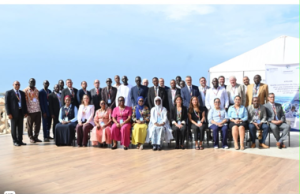
The workshop, supported by ATLAFCO, brought together representatives from its 22 member states, alongside participants from the Sub-Regional Fisheries Commission (CSRP), Portugal’s Atlantic International Research Centre (AIR Centre), and the OMPDA.
The gathering sought to facilitate the exchange of experiences and strengthen cooperation among ATLAFCO member states through the RAFAQUA and RAFISMER networks, with particular emphasis on complementarity, knowledge-sharing, and the sustainable development of aquaculture across the continent.
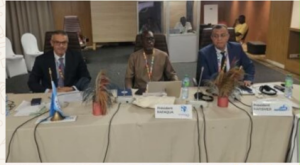
In his remarks, ATLAFCO Executive Secretary, Mr. Taoufik El Ktiri, commended the quality of the presentations and contributions, noting that they demonstrated a strong collective commitment to building a sustainable, competitive, profitable, and equitable aquaculture sector in Africa.
Meanwhile, RAFISMER President Mohamed Najih stressed that a successful transition to aquaculture would require stronger collaboration among policymakers, research institutions, private-sector actors, and development partners.
He emphasised that governments must play a facilitating role by creating an enabling environment for investment, establishing and regulating production zones, and modernising the infrastructure needed to support the sector.
For his part, RAFAQUA President Mr. Samba Ka called for coordinated action among African countries to address the challenges facing aquaculture and develop sustainable solutions capable of delivering long-term benefits.
The discussions underscored the growing importance of aquaculture as a potential driver of inclusive economic growth, employment creation, food security, and sustainable development in Africa.