
ECOWAS Presses Guinea to Withdraw Troops from Yenga, Backs Sierra Leone’s Peace and Democratic Reforms

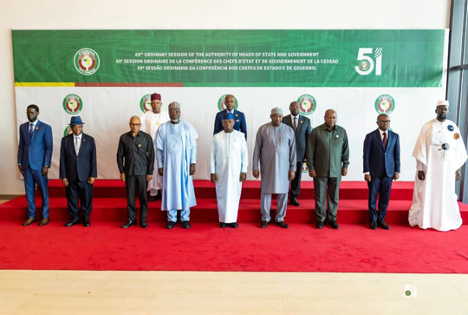
The 69th Ordinary Session of the ECOWAS Authority of Heads of State and Government concluded with a strong call on Guinea to withdraw its troops from the disputed border enclave of Yenga, reaffirming the regional bloc’s commitment to a peaceful resolution of one of West Africa’s longest-running territorial disputes.
In its final communiqué, ECOWAS commended Sierra Leone and Guinea for the partial reopening of the Yenga border crossing but urged the Guinean authorities to fully withdraw their military presence from Yenga and Lofa in line with the Tripartite Communiqué signed in March 2026.
“The Authority commends the authorities of Sierra Leone and Guinea for the partial reopening of the Yenga border and further urges the Guinean authorities to fully withdraw their troops and continue to pursue diplomatic solutions,” the communiqué stated.
To accelerate progress, the Authority directed the ECOWAS Commission to fast-track technical assessments of border flashpoints and develop sustainable solutions in collaboration with the Mano River Union (MRU), the African Union (AU), and the United Nations Office for West Africa and the Sahel (UNOWAS). The initiative is aimed at preventing renewed tensions and ensuring lasting peace along the Mano River corridor.
Beyond the Yenga dispute, the summit highlighted Sierra Leone’s ongoing efforts to strengthen political stability and democratic governance ahead of the 2028 General Elections.
ECOWAS welcomed the progress made under the Agreement for National Unity between the Government of Sierra Leone and the opposition All People’s Congress (APC), describing recent developments as encouraging steps toward national cohesion.
The regional bloc also commended President Julius Maada Bio’s decision to discontinue legal proceedings against former President Dr. Ernest Bai Koroma, describing the move as a statesmanlike gesture that contributes to reconciliation and national unity.
The Authority urged all political actors and stakeholders to continue prioritizing dialogue, inclusivity, and transparency throughout the constitutional and electoral reform processes to ensure peaceful, credible, and inclusive elections in 2028.
The summit also focused extensively on the deteriorating security situation across West Africa. ECOWAS leaders strongly condemned the persistent terrorist attacks in the Sahel and Lake Chad Basin and reaffirmed their commitment to operationalizing the ECOWAS Counterterrorism Brigade by 2027 to strengthen the region’s collective security architecture.
Leaders further expressed solidarity with Nigeria over the growing threat of terrorism, banditry, and kidnappings, while condemning recent xenophobic attacks in South Africa and calling for the protection of all African citizens living across the continent.
Sierra Leone also secured a key leadership position within the ECOWAS Commission with the appointment of Francess Piagie Alghali as Commissioner for Political Affairs, Peace and Security—one of the bloc’s most strategic portfolios responsible for conflict prevention, governance, democracy, and regional peacebuilding.
The successful hosting of the ECOWAS Summit in Lungi further enhanced Sierra Leone’s diplomatic profile, placing the country’s priorities—including border diplomacy, political reconciliation, and electoral reforms—at the forefront of regional discussions.
As ECOWAS intensifies efforts to resolve the Yenga impasse and strengthen democratic governance across the sub-region, the decisions reached in Lungi reaffirm the bloc’s commitment to dialogue, peaceful coexistence, and regional integration as the foundation for lasting peace and sustainable development.