
Speaker Lacked Authority to Refer Parliamentary Matter to Supreme Court, Former SLPP Secretary General Claims


By Kelvin Jay
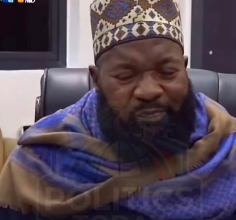
Former SLPP Secretary General and veteran legal practitioner Sulaiman Banja Tejan-Sie has argued that the Speaker of Parliament, Hon. Segepoh Solomon Thomas, lacks constitutional authority to refer the disputed parliamentary matter concerning the Constitutional Amendment Bill to the Supreme Court.
Speaking on the Truth Media Morning Devotion programme, Tejan-Sie said the 1991 Constitution gives the President, rather than the Speaker of Parliament, the authority to refer constitutional questions to the Supreme Court for guidance and interpretation.
“The 1991 Constitution of Sierra Leone does not give the Speaker the authority to refer a matter of such nature to the Supreme Court. The Constitution gives that power to the President and not the Speaker of Parliament,” he argued.
Tejan-Sie further accused the Speaker of misinterpreting the Constitution and encroaching on the constitutional functions of the Judiciary. He went as far as describing the Speaker’s action as potentially amounting to treason, although he acknowledged that the threshold had not been reached because the President had not yet assented to the Bill.
He also relied on Section 108 of the 1991 Constitution, arguing that any alteration of the Constitution requires the constitutionally prescribed two-thirds majority in Parliament.
Legal Practitioner Says Treason Claim Is Premature
Private legal practitioner Chukwuemeka Taylor cautioned against describing the Speaker’s actions as treason at this stage.
Taylor argued that the Constitution had not yet been altered because the President had not assented to the Bill. However, he agreed with Tejan-Sie that constitutional amendments must comply with the requirements of Section 108.
According to Taylor, the Speaker acted ultra vires the relevant provisions of Section 108 and that the Bill should not have been passed because, in his view, the process was constitutionally flawed.
He also criticized the APC parliamentary group for walking out during the Committee Stage. Taylor argued that the opposition MPs should have remained in Parliament throughout the process and continued to challenge the Bill until the Third Reading, where the final vote would be taken.
“When the APC walked out at the Committee Stage, it kind of offended the process. They should have remained part of the process and argued their position until the Third Reading,” he said.
Taylor maintained that the absence of opposition MPs subsequently made it easier for the SLPP majority to pass other matters without dissent.
Timbo Disputes Claim That There Was No Vote at Second Reading
Osman Abdul Timbo challenged the assertion that there was no vote during the Second Reading of the Bill.
According to Timbo, a vote was conducted through a collection of voices, which he said is permitted under the Standing Orders of Parliament.
“The Second Reading is where we debated the entire Bill. We voted at the Second Reading stage for the Bill to proceed, but we raised contentious issues and opposed its passage,” Timbo explained.
However, he criticized the Speaker’s decision to approve the constitutional amendment using a simple majority rather than the two-thirds majority he believes is required under Section 108.
Timbo also referred to an earlier ruling concerning the removal of the Auditor General, arguing that the Speaker had previously ruled that a simple majority was sufficient. He suggested that this earlier interpretation may have influenced the Speaker’s subsequent decision on the Constitutional Amendment Bill.
He described the events in Parliament as a “comedy of errors” and argued that the Bill remains within the parliamentary process.
Timbo further maintained that if the President assents to the Bill in its current controversial form, those who participated in the process could potentially face serious legal consequences. He referred to the legal principle of participatio criminis in making his argument.
He also questioned a statement published on Parliament’s official Facebook page which asserts that the Speaker ruling is sacrosanct and cannot be inquired into by any Court. He cited Section 171(13) in support of the argument that the Speaker rulings may be subjected to judicial scrutiny.
Emmanuel Saffa Abdulai: It Is Too Early to Call It Treason
Legal practitioner Emmanuel Saffa Abdulai, Esq., urged caution over the use of the term “treason” in describing the Speaker’s decision.
Abdulai described the Speaker’s action as a mistake rather than an act that should immediately be characterized as treason.
“The problem we have is that we are trying to amend the Constitution piecemeal. I want to consider what happened in Parliament as a mistake,” he said.
He maintained that it would be premature to determine whether the Speaker’s actions amounted to treason, particularly given the stage at which the Bill currently stands.
Questions Raised Over Second Reading Procedure
Another legal commentator, Eleanor Thompson, raised concerns about the procedure followed during the Second Reading of the Bill.
Thompson acknowledged that a vote was taken by a collection of voices but questioned whether such a process could establish the numerical requirement of a two-thirds majority.
“Yes, they took a vote at the Second Reading and the vote was by collection of voices, but you cannot determine a two-thirds vote through the collection of voices. You cannot get quantitative data through a qualitative process,” she argued.
She therefore questioned whether the correct constitutional procedure was followed before the Bill proceeded to the Committee Stage.
Thompson further argued that amendments to the Constitution should be subjected to the requirements of Section 108 and maintained that the Committee Stage should not be confused with the stages at which the required votes are taken.
She cited arguments made by APC MP Hon. Daniel Koroma during the parliamentary debate and said the constitutional amendment process requires strict adherence to the prescribed procedure.
Thompson also said APC Leader Hon. Abdul Kargbo raised concerns during the proceedings, which she claimed prompted the Speaker to order a vote during the Committee Stage.
The competing views expressed by the legal practitioners and political commentators have intensified the debate over whether Parliament followed the correct constitutional and procedural requirements in processing the Constitutional Amendment Bill.
At the centre of the controversy is the interpretation of Section 108 of the 1991 Constitution, the required voting threshold for constitutional amendments, the Speaker’s authority in referring parliamentary matters to the Supreme Court, and whether the procedures followed during the various stages of the Bill complied with the Constitution and Parliament’s Standing Orders.