
Constitutional Amendment Bill Brouhaha: Will President Bio Defy SLPP Pressure or Heed Legal and Moral Counsel?

By Kelvin Jay
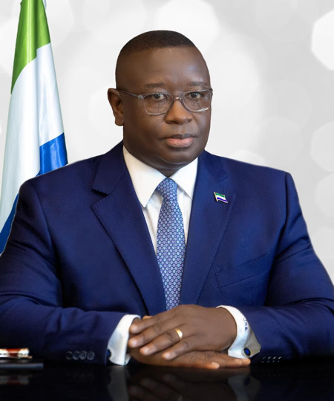
The controversy surrounding the passage of Sierra Leone’s Constitutional Amendment Bill has intensified, placing President Julius Maada Bio at a critical constitutional crossroads.
With mounting pressure from civil society, organised labour, religious leaders, opposition politicians and legal practitioners, the key question now is: Will President Bio append his signature to the controversial Bill, return it to Parliament, or seek further constitutional guidance before taking a decision?
The Bill was passed by Parliament amid fierce disagreement over the procedure followed, with critics alleging that the constitutional requirements for altering the 1991 Constitution were not properly satisfied.
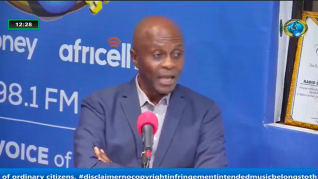
Opposition Leader in Parliament, Hon. Abdul Kargbo, has described the Speaker of Parliament, Hon. Segepoh Solomon Thomas’ decision to proceed with the passage of the Bill as a “treasonable act.” Kargbo alleges that the Speaker relied on Section 91 of the Constitution instead of Section 108, which specifically governs constitutional amendments.
Former SLPP Secretary-General and veteran lawyer Sulaiman Banja Tejan-Sie has also strongly criticised the process. He argues that the Bill should not have proceeded without the constitutionally required two-thirds majority under Section 108.
Tejan-Sie has indicated that, if asked to advise the President, he would counsel President Bio not to assent to the Bill but to return it to Parliament for further consideration.
Religious Leaders Join the Pressure
The Inter-Religious Council of Sierra Leone has added its voice to the growing concerns, reminding Parliament and the public that the Constitution is the supreme law of the land and belongs to the people of Sierra Leone—not to any political party, whether in Government or opposition.
The Council has called for any alteration to the Constitution to be undertaken strictly in accordance with constitutional requirements and with the highest degree of responsibility, transparency and national consciousness.
The Sierra Leone Labour Congress has similarly appealed to President Bio not to assent to the Bill, arguing that the process lacked sufficient consensus and failed to adequately take into account concerns raised by stakeholders and the public.
A Difficult Choice for President Bio
President Bio is therefore faced with a politically and constitutionally sensitive decision.
On one side are members and supporters of the ruling SLPP who may expect the President to assent to legislation passed by Parliament. On the other are lawyers, religious leaders, organised labour, opposition politicians and other stakeholders who are urging him to withhold his assent until the constitutional questions surrounding the Bill are properly resolved.
The President’s decision could consequently become an important part of his constitutional legacy.
The Sam-Sumana Precedent
The current controversy also brings back memories of the constitutional dispute surrounding the removal of former Vice President Samuel Sam-Sumana by then President Ernest Bai Koroma in 2015.
Koroma argued that Sam-Sumana’s expulsion from the APC rendered him ineligible to remain Vice President because Section 41 of the Constitution requires the Vice President to belong to a political party.
The decision was challenged by legal experts, civil society organisations and opposition figures, who argued that the President did not have unilateral constitutional authority to remove the Vice President and that removal should have followed the impeachment procedure provided by the Constitution.
The Supreme Court subsequently ruled in favour of President Koroma in 2015. However, the ECOWAS Court of Justice later reached a different conclusion in 2017, finding that Sam-Sumana’s removal was unlawful and violated his rights, including his right to a fair hearing.
At the time, then Information Minister and Presidential Spokesperson Alhaji Alpha Kanu was among the administration’s prominent defenders of President Koroma’s decision, publicly justifying the Government’s position and portraying Sam-Sumana’s conduct as an abandonment of office that required his replacement.
Will History Repeat Itself?
The Constitutional Amendment Bill now presents President Bio with another defining constitutional moment.
Will he follow political expectations and sign the Bill, or will he listen to the legal and moral voices urging restraint?
For President Bio, the decision may go beyond the immediate political interests of the SLPP. It could ultimately determine how his administration is remembered in the constitutional history of Sierra Leone.
The question is no longer simply whether President Bio can sign the Bill. The bigger question is whether he should—amid the unresolved constitutional objections surrounding its passage.