
Freetown Port Rejects The Economist Report, Defends Operations Under Yankuba Bio


The Sierra Leone Ports and Harbours Authority (SLPHA) has rejected allegations published by The Economist concerning the alleged unauthorized removal of containers from the Port of Freetown, describing the claims as false and damaging to the reputation of the institution and Sierra Leone.
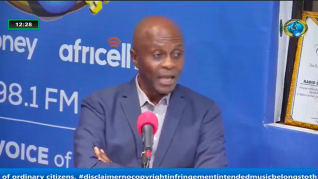
Director-General of the SLPHA, Yankuba Askia Bio, made the clarification during a press briefing in Freetown, where he also outlined the Authority’s operational reforms, security measures and recent growth in cargo handling.
The allegations formed part of a September 2026 The Economist report examining the reported activities of wanted Dutch national Jos Leijdekkers in Sierra Leone. The publication alleged that some containers were allowed to bypass established scanning procedures before being removed from the port complex at night.
Bio strongly rejected the allegations, questioning the basis of the claims and noting that the report attributed them, in part, to information provided by an individual reportedly encountered by the publication in a bar.
He also disputed any suggestion that he could have been responsible for incidents allegedly occurring in 2022, stressing that he was not serving as Director-General at the time.
“I was not in office in 2022. I took up office in October 2023,” Bio said.
Parliamentary records indicate that Bio’s appointment as Director-General of the Sierra Leone Ports Authority was confirmed by Parliament on 24 October 2023, alongside Deputy Director-General Judith Kosseh.
Bio also clarified reports concerning the Port’s operating hours, explaining that 24-hour operations commenced in 2026 in response to increasing cargo volumes.
According to SLPHA figures presented at the briefing, the Port is currently handling approximately 8,670 containers per month, reflecting sustained growth in cargo activity.
Full transit volumes increased from 1,029 TEUs in 2023 to 2,294 TEUs in 2024 and 3,286 TEUs in 2025.
Full export volumes also increased from 12,661 TEUs in 2024 to 17,750 TEUs in 2025, while imports rose from 68,227 TEUs in 2023 to 75,619 TEUs in 2024 and 82,609 TEUs in 2025.
Bio attributed the growth and modernization of the Port to collaboration between the SLPHA, Government institutions and private-sector operators.
Bio explained that the Port operates under a landlord-port model, introduced in 2011 when containerized cargo operations were concessioned to Bolloré Logistics, now operating as Africa Global Logistics/Freetown Terminal Limited (FTL).
Under the arrangement, the SLPHA provides regulatory oversight and port infrastructure, while specialized private operators undertake various operational functions.
The Authority said its responsibilities include regulation, infrastructure management, stakeholder coordination, safety and security supervision, and maintaining a conducive environment for maritime and commercial activities.
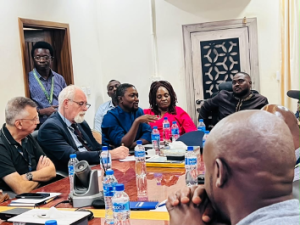
Representatives of port operators at the briefing outlined their respective responsibilities.
Logistics Services Solutions (LSS) monitors cargo movements from loading points to final discharge in Freetown, while Integrated Trade Services (ITS) handles scanning and inspection of containerized imports and exports.
Nectar Sierra Leone Bulk Terminal (NSBT) manages bulk, break-bulk and consolidated cargo, while stevedoring companies provide vessel labour and private operators undertake quay transportation and haulage.
Customs authorities, meanwhile, are responsible for revenue collection and ensuring compliance with relevant trade laws and regulations.
Bio said security at the Port has been strengthened through improved technology, specialized training and closer coordination among law-enforcement and security agencies.
He disclosed that new patrol vehicles have been acquired, while 69 security officers are currently undergoing professional training.
On the issue of illicit drugs, terminal operators acknowledged that cocaine has previously been discovered during port operations, but maintained that such seizures resulted from established security and inspection procedures.
They further disclosed that port enforcement operations had contributed to the seizure of more than 1,400 cartons of Tramadol and counterfeit pharmaceuticals since January 2026, with the consignments subsequently handed over to the police for testing and destruction.
The operators also rejected suggestions that containers could be removed without undergoing required scanning, inspection and clearance procedures.
They said Bio had never interfered with their operations and had never visited the port accompanied by soldiers to facilitate the removal of a container.
Port operators expressed concern that negative reports about the facility could affect both the reputation of the SLPHA and the commercial interests of companies operating at the port.
Bio said approximately 90 percent of terminal operators and private firms at the Port are European Union-based companies, which, he maintained, operate under international maritime standards and Sierra Leonean law.
Operators highlighted investments running into millions of US dollars in infrastructure development, berth construction, modern equipment and technology.
The Director-General called on international media organisations and foreign journalists reporting on Sierra Leone’s maritime sector to engage the SLPHA and other relevant authorities for clarification before publishing allegations concerning port operations.
He reaffirmed the Authority’s commitment to transparency and encouraged journalists to seek official responses and verify information directly with the SLPHA.
Bio said addressing the allegations was necessary not only to clarify the Authority’s position but also to protect the reputation of Sierra Leone’s principal commercial gateway at a time when cargo volumes and private-sector investment continue to expand.