
WOMEN FISH PROCESSORS TAKE CENTRE STAGE IN SIERRA LEONE’S SIX COASTAL COMMUNITIES


By Mohamed Kamara
Women fish processors in six coastal communities across Sierra Leone are playing a crucial role in the artisanal fishing industry, contributing significantly to food security, household incomes and the country’s blue economy.
The communities of Funkia, Tombo, Goderich, Shenge, Konakridee and Yeliboya depend heavily on artisanal fisheries, with women occupying a central position in the fishing value chain. They are responsible for purchasing fresh fish, smoking, drying, preserving, packaging and marketing fish products that supply households, local markets and businesses across the country.
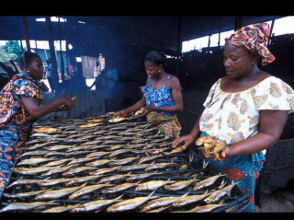
Although fishermen are often recognised as the face of the fishing industry, women fish processors remain equally important to the survival of coastal communities and the national economy. Their contribution extends beyond fish processing, as they support household incomes, create employment opportunities and sustain the livelihoods of thousands of families.
As Sierra Leone strengthens its commitment to sustainable ocean governance, the role of these women deserves greater recognition, particularly in discussions surrounding the United Nations Agreement on the Conservation and Sustainable Use of Marine Biological Diversity of Areas Beyond National Jurisdiction, commonly known as the BBNJ Agreement.
Women fish processors are a fundamental pillar of Sierra Leone’s blue economy. Their activities ensure that fish harvested by artisanal fishermen are preserved and made available to consumers, particularly in communities where refrigeration and modern storage facilities remain limited.
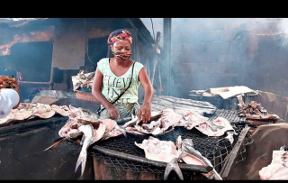
In communities such as Tombo and Goderich, women invest their own financial resources in purchasing fresh fish, processing it and marketing the finished products to generate income for their families.
A 2021 study conducted by Kadiatu Seaport Kamara at Funkia, examining women’s participation in artisanal fisheries across six coastal communities in Sierra Leone, highlighted their significant contributions to fish processing, marketing and community livelihoods.
However, despite their important role, women fish processors continue to face numerous challenges.
According to Mary I. Kamara, a fish trader and processor, women in the sector encounter difficulties including limited access to affordable loans and financial support, inadequate storage and cold-chain infrastructure, high costs of firewood and other processing materials, limited representation in fisheries policy discussions, and environmental degradation, particularly the destruction of mangrove ecosystems.
These challenges affect their productivity, income and ability to contribute fully to sustainable fisheries development.
Meanwhile, Alhaji Ibrahim Conteh, Secretary-General of the Sierra Leone Industrial Fishing Companies Association (SLIFCA), said that although the BBNJ Agreement does not directly regulate everyday fishing and fish-processing activities within Sierra Leone’s national waters, its implementation presents opportunities for developing countries to strengthen marine conservation, scientific research, technology transfer and inclusive ocean governance.
He noted that women fish processors could benefit indirectly through national programmes that link ocean conservation with sustainable livelihoods.
Conteh emphasised that women fish processors must not be excluded from discussions surrounding the implementation of the BBNJ Agreement, noting that their traditional knowledge, economic contributions and close relationship with coastal ecosystems make them important stakeholders in sustainable ocean governance.
He further stressed that Sierra Leone’s blue economy cannot be secured without recognising and empowering women working in the fisheries value chain.
“They are not merely participants in the fisheries value chain; they are important contributors to food security, economic development, poverty reduction and the sustainability of coastal communities,” he maintained.
He also called on the international community to advance the implementation of the BBNJ Agreement, stressing that Sierra Leone has an opportunity to strengthen its ocean governance framework by ensuring that women, particularly those engaged in artisanal fisheries, are included in discussions and programmes that affect their livelihoods.
He concluded that protecting marine biodiversity must go hand in hand with protecting the people whose livelihoods depend on the ocean.