
RCBank, UNCDF Launch National Digital & Financial Literacy Survey to Boost Financial Inclusion in Sierra Leone

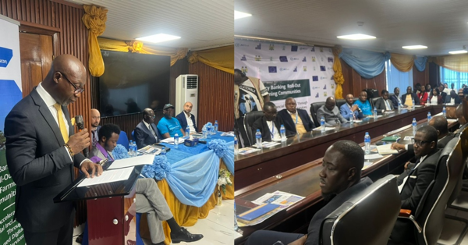
Rokel Commercial Bank (RCBank), in collaboration with the United Nations Capital Development Fund (UNCDF), has officially launched the National Digital and Financial Literacy Survey at the bank’s Clock Tower Branch in Freetown.
The survey, which engaged 4,109 Sierra Leoneans across the country, assessed levels of financial and digital literacy, access to financial services, and the uptake of digital financial tools. The findings are expected to guide policies aimed at strengthening financial security, enhancing business sustainability, and reducing poverty.
Respondents represented a diverse demographic profile: 70% women, 30% men, 61% rural residents, and 39% urban dwellers, with youth aged 18–35 accounting for 44% of participants. The results reveal significant disparities in financial inclusion and digital access, particularly among rural populations, women, low-income earners, and adults with limited education.
The survey shows that overall financial inclusion—based on bank account ownership, credit, savings, and insurance—stands at 15.1%, leaving over three-quarters of adults excluded from formal financial services. When mobile money usage is considered, inclusion rises to 32.9%, reflecting a modest 4% improvement since 2021.
Key findings include:
• 15.7% of adults own bank accounts
• 20.3% have access to credit
• Insurance coverage remains critically low at 4.9%
• Although nearly half consider themselves long-term savers, only 15.9% save through formal financial institutions
Overall financial literacy scored 60.1/100, falling short of the benchmark score of 72, with urban, educated, and higher-income populations performing better than rural and female counterparts.
Digitalization and DFS (Digital Financial Services) Challenges
• Mobile phone ownership stands at 48.7%, with 63% of phone owners using smartphones.
• Urban residents (67%) are nearly twice as likely to own a mobile phone as rural residents (35%).
• Male ownership (60%) is significantly higher than female ownership (38%).
• Digital literacy remains critically low at 26/100.
• Rural districts like Koinadugu (2.7) and Pujehun (8.5) recorded the lowest digital literacy scores.
• Only 25.4% of adults have mobile money accounts, and just 3% link these accounts to bank accounts.
• Despite low usage, 82% acknowledge the usefulness of digital financial services, while 50% express distrust.
Mr. John Sumaila, Board Chairman of RCBank, emphasized the institution’s commitment to inclusive financial growth:
“Financial inclusion is not merely a policy goal—it is a pathway to empowerment, resilience, and prosperity.”
He highlighted the bank’s three strategic pillars: expanding access points nationwide, enhancing financial literacy, and investing in digital technology.
A representative of the Bank Governor expressed the Central Bank’s support, noting that evidence-based policymaking relies on robust data. He traced the country’s journey from the 2009 Financial Sector Assessment to current initiatives such as the National Switch and the fintech regulatory sandbox, aimed at driving access and innovation.
Representing the Minister of Finance, Dr. Simeon Jonjo emphasized the role of financial and digital literacy in fostering economic growth, particularly in agriculture, which employs 60–70% of Sierra Leone’s workforce. He stressed that digital adoption is vital for harnessing the potential of the youth, who make up over 60% of the population.
Speaking on behalf of the Minister of Youth Affairs, Cyrus Ngebah highlighted youth empowerment as a national priority and praised RCBank for its youth-focused digital platforms and partnerships with government initiatives such as the Youth Connect Hubs.
A representative of the European Union underscored the importance of public–private partnerships in driving digital financial development. He cited the €6 million Salone Access to Finance matching grant facility for SMEs and farmers’ cooperatives as a key enabler of rural transformation.
UNCDF’s representative contextualized Sierra Leone’s progress regionally and globally, noting that mobile money usage has surpassed 2 million active wallets, with projected annual transaction values of up to 10 billion Leones. However, he stressed that infrastructure limitations, low digital literacy, and rural access barriers remain major challenges.
Dr. Walton Ekundayo Gilpin, Managing Director of RCBank, reaffirmed the importance of collaboration with stakeholders such as the EU, UNCDF, and the Bank of Sierra Leone. He pledged sustained support for programs aimed at strengthening financial literacy, expanding digital adoption, and advancing financial inclusion—particularly among young people.
Dr. Gilpin noted that the survey results will inform actionable initiatives to improve nationwide financial well-being, digital empowerment, and economic resilience.