
Fuel Price Hike… NPRA Boss Accused of Playing Devil’s Advocate as Sierra Leone Records Region’s Highest Pump Price

By VOS Staff Writer
The latest hike in fuel prices has reignited public anger across Sierra Leone, placing the Petroleum Regulatory Agency (NPRA) under intense scrutiny. Critics accuse the agency’s leadership of regulatory inconsistency and selective intervention that appears to favor oil marketing companies over ordinary citizens.
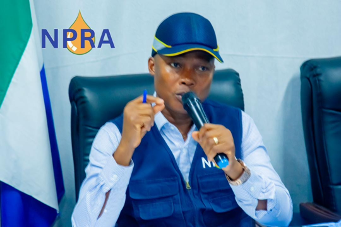
During periods of declining global fuel prices in 2025, the NPRA failed to officially announce or adjust the pump price per litre, despite mounting public concern and repeated calls for action. At the time, NPRA Chief Executive Officer, Brima Baluwa Koroma, adopted a hands-off posture, emphasizing market competition and insisting that the agency would not interfere in pricing decisions.
Baluwa repeatedly maintained that fuel prices were driven by market forces and global realities rather than direct government control. He argued that “the market does not move; it reacts,” stressing that Oil Marketing Companies (OMCs) such as NP and Texaco were free to set prices based on their margins.
As a result, while some OMCs quietly reduced pump prices to around Le25–Le24 per litre, the official NPRA benchmark price remained pegged at Le27 per litre, with no formal review or public announcement. Critics argue that this regulatory inaction denied consumers the full benefit of falling prices.
Observers have since described the NPRA’s refusal to act during that period as “playing hanky-panky” with oil marketers, accusing the agency of shielding industry profits at the expense of struggling citizens.
However, critics say the agency’s posture changes swiftly whenever prices rise—particularly when increases are compounded by government-imposed excise taxes on petroleum products. In such instances, the NPRA becomes proactive, quickly adjusting pump prices and rolling out complex pricing formulas to justify the hikes.
This time, the agency did not even issue a press release, as was customary in the past—a move that further fueled public frustration. Historically, when international fuel prices rose, the NPRA often accompanied its announcements with regional price comparisons, arguing that Sierra Leone’s fuel prices remained competitive within the sub-region.
In 2024, the NPRA officially shifted its pricing benchmark from the FOB Mediterranean market to West African benchmarks, claiming the move would better align domestic prices with regional import realities. However, current data appears to undermine that justification.
As of late January 2026, following the most recent price hike, Sierra Leone is now selling fuel at the highest pump price among its immediate neighbors:
• Sierra Leone: $1.39 (NLe 28.50) per litre
• Ghana: $1.28 (GHS 13.97) per litre
• Liberia: $0.85 (LD 158.38) per litre
These figures have intensified accusations that regional benchmarking is being selectively applied to rationalize price increases rather than protect consumers.
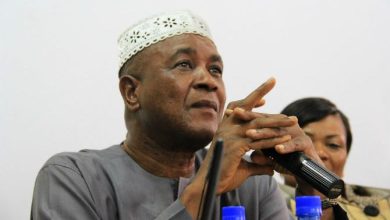
Opposition Leader Abdul Kargbo, criticizing the latest hike, drew a historical comparison to highlight what he described as the irrationality of current pricing.
“In May 2011, a barrel of crude oil sold at about $114, yet petrol was sold at Le5 per litre,” Kargbo noted. “Today, crude oil is around $70 per barrel, which means petrol should cost roughly Le3.1 per litre, but it is being sold at Le28.5. How do you explain that?”
Civil society groups have also joined the criticism. Edmond Abu of the Native Consortium accused the NPRA of hiking fuel prices despite a continued downward trend in global oil prices. He dismissed the agency’s benchmarks and figures as misleading, describing them as “a scam.”
“The government and the NPRA have completely lost touch with the suffering masses,” Abu said, arguing that the fuel pricing formula is heavily skewed toward taxes rather than genuine cost recovery.
Abu further alleged that the price increase followed a controversial meeting between oil marketers and President Julius Maada Bio at State House—raising questions about whether such engagements align with the President’s repeated promise of a “Year of Action” for ordinary Sierra Leoneans.
Public reaction has been swift and emotional.
In Bo, trader Saidu Koroma said he only became aware of the fuel hike after boarding a vehicle to transport his goods.
“I was shocked when the driver charged me an exorbitant amount—far higher than what I usually pay,” he said. “The increase came without warning, and it has eaten deep into my profit.”
Another trader echoed similar frustrations, warning that rising fuel costs would inevitably translate into higher food prices and further worsen the already severe cost-of-living crisis.
As pressure mounts, many Sierra Leoneans are now demanding transparency, consistency, and fairness from the NPRA—questioning whether the regulator exists to protect the public interest or merely to legitimize fuel price increases whenever it suits the system.